Image Processing
Raw pixels are filtered, enhanced, denoised, and prepared for higher-level analysis.

Ofer Miller, Ph.D.
Computer Vision . Image processing . Graph Theory Models . Video Analysis
Ph.D. in Computer science | Researcher in Computational Imaging & Signal analysis
Main Menu
• "Celia and Marcos Maus" Annual Prize” in Computer Science for outstanding achievements in doctoral research, May 2002.• Excellence Scholarship for Doctoral Students from the Council for Higher Education in the field of high technology, December 2000• Tel Aviv University Award for Excellence in Master’s Studies in Science, June 1999.• Tel Aviv University Scholarship for outstanding Master’s Students in Science, October 1998


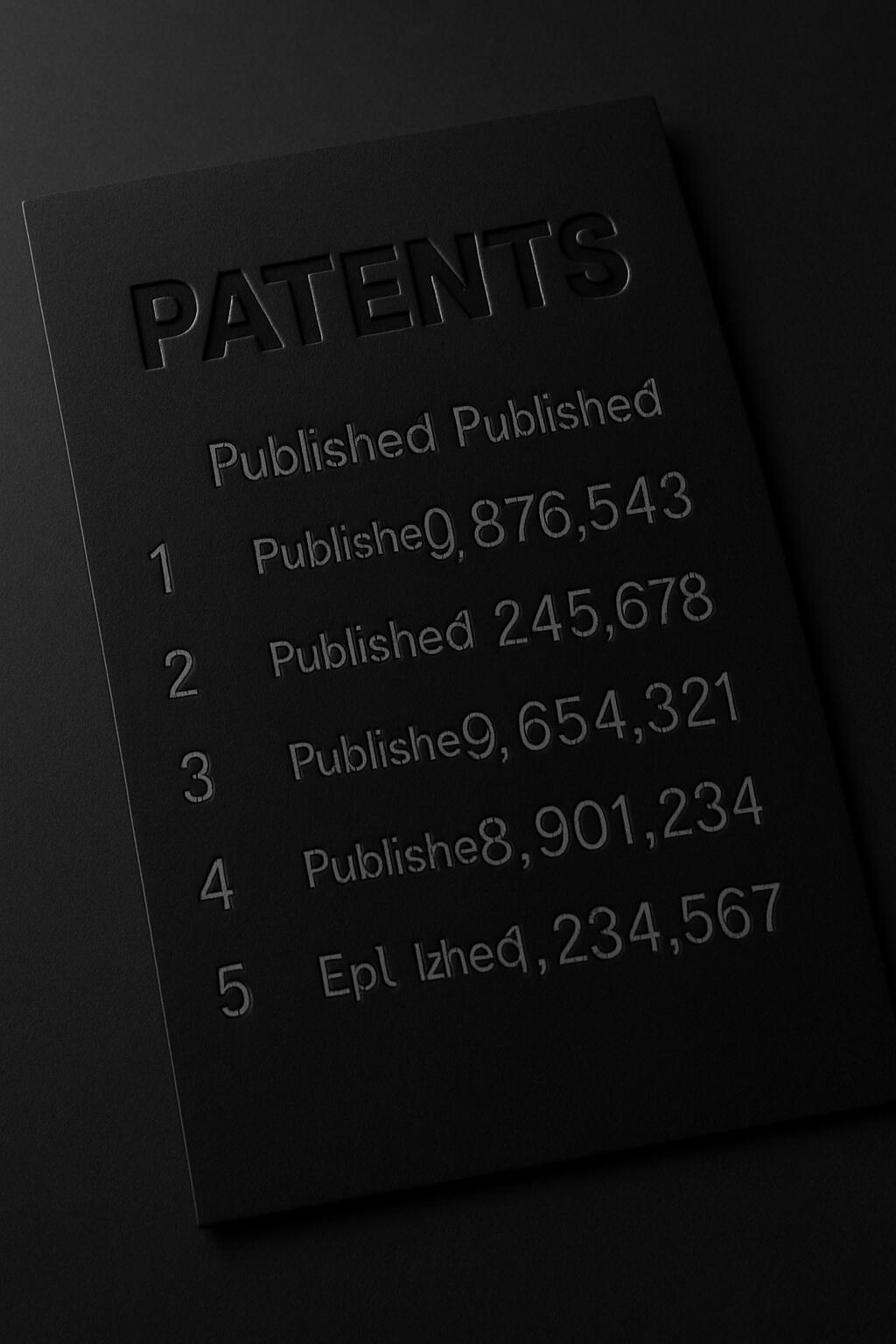
List of Patents
| Title | Author | Year | Patent#: |
|---|---|---|---|
| 1. "Determine Viewer's exposer to Visual Messages" | Ofer Miller | 2016 | 20170169464 |
| 2. "Method for logging a user in to a mobile device" | Ofer Miller | 2015 | 20150049922 |
| 3. Method for rating areas in video frames | Ofer Miller... | 2013 | 8457402 |
| 4. Method and Device for Processing Video Frames | Ofer Miller... | 2012 | 20120017238 |
| 5. System and Method for Enriching Video Data | Ofer Miller... | 2011 | 20110217022 |
| 6. Method for illumination independent change detection in a pair of registered gray images | Ofer Miller... | 2006 | 7088863 |
| 7. Automatic object extraction | Ofer Miller... | 2006 | 7085401 |
Research contribution during studies at TLV University
Illumination independent Object based Change Detection Article
Video Graph based Segmentation of Moving Objects while spatial and temporal information are available.
Still Image Segmentation Based on Adaptive Local Thresholds
Tracking of Moving Objects Based on Matching between Graph Edges
Contribution to Artimedia Initiative
Miller-Based Publications/Research
Human vision naturally interprets and understands the surrounding world as a three-dimensional (3D) environment. In contrast, most of the common visual sensors such as cameras still capture only two-dimensional (2D) projections of this world. During the projection from 3D to 2D, a significant amount of information—particularly depth information is lost. While humans are able to effortlessly interpret the dynamic structure of 2D image sequences, achieving comparable understanding computationally is challenging, especially when relying on a single visual sensor. Although using multiple sensors can facilitate 3D reconstruction, many multimedia applications rely on a single-sensor setup, making the absence of explicit 3D information one of the fundamental challenges in computer vision. Consequently, the effective use of spatial and temporal cues becomes essential for understanding the dynamic structure of scenes captured with a single camera.Complexity note:
In much of my bellow public research, I rely on graph-based data structures and their associated algorithms including : breadth-first-search (BFS), depth-first-search (DFS), graph contraction, minimum spanning tree (MST), finding k shortest path between two vertices, to obtain efficient implementations. Thus, provides a set of related constructive algorithms for high-level processing that has linear, almost-linear and polynomial time complexity. Linear or almost linear time-complexity algorithms are proportional to the image size n. Thus , Its enables getting a polynomial time complexity for some algorithms when the complexity is proportional to number of arcs E in the image segmentation boundaries. Then the complexity becomes O(E x E) rather than O(N x N) and E<<N.
Basic and Visual Terms
Is it possible to segment "correctly" on still Images ? (while no motion info available)

Here is the official publication Link of the above article.
The published algorithm was considered to be the Most Cited paper !

Graph based Segmentation of Moving Objects Based on Connectivity Analysis of Spatio-temporal information

Here is the official publication Link of the above article.
Identify changes between two gray images taken in extreme! different illumination.

Here is the publication Link of the above article.
What is the AI algorithm ? how its evolved ?
Lets start with understanding of what is The K-means algorithm: so its an unsupervised machine learning algorithm used to group data points into k clusters based on their similarity, with each data point assigned to the cluster with the nearest centroid (cluster center). It works by iteratively assigning data points to clusters and then updating the centroids to the mean of the assigned points, repeating the process until no data points change cluster membership. K-means is useful for applications like customer segmentation and image analysis but requires the number of clusters (k) to be specified beforehand and is best at finding spherical clusters.

Artificial intelligence systems operate by learning statistical patterns from data and using those patterns to make predictions or decisions. At their core, modern AI models, especially deep neural networks, optimize a large set of parameters through iterative training, where the algorithm compares its predicted output to the correct output, computes an error, and adjusts internal weights using gradient-based optimization methods such as backpropagation. Through repeated exposure to vast amounts of labeled or unlabeled data, the model gradually minimizes this error and forms a high-dimensional representation of the underlying structure of the problem. Once trained, the AI system applies these learned representations to new inputs, enabling tasks such as classification, pattern recognition, reasoning, and generative output.
Now , lets jump all the way trying to describe the link between the basic k-means concept and the AI algorithms :
So the k-means algorithm, while not a learning model in the sense of deep neural networks, is a foundational unsupervised machine-learning method that contributes to the broader architecture of artificial intelligence. Through an iterative process of assigning data points to the nearest centroid and recomputing those centroids, k-means minimizes intra-cluster variance and produces a compact representation of complex datasets. In the context of AI, k-means plays the main role as a preprocessing or feature-extraction, and representation-learning tool. It is used to reduce dimensionality before training neural networks, to initialize parameters in deep models. More broadly, k-means embodies the principle that AI systems often learn by organizing and compressing information in structured ways, enabling models to generalize from raw data to meaningful abstractions.
so , what we have here ??, conceptually, AI particularly is a deep learning, can be viewed as a vast generalization of the principles embodied in k-means clustering. while k-means partitions data in a relatively simple Euclidean space by assigning each point to the nearest centroid, deep neural networks expand this notion into extremely high-dimensional, learned feature spaces. In these spaces, the model implicitly performs a form of dynamic clustering: representations of similar inputs are projected into nearby regions, while dissimilar inputs are pushed apart. Thus, AI systems can be interpreted as applying k-means-like separation but across hundreds or thousands of learned dimensions, with the boundaries not fixed by geometry alone but continually adjusted through gradient-based optimization. In this sense, the core intuition of k-means grouping similar patterns is preserved, while the expressive capacity is vastly expanded to support abstraction, generalization, and complex decision-making. so , just for those who like visual , here its how its look like :